
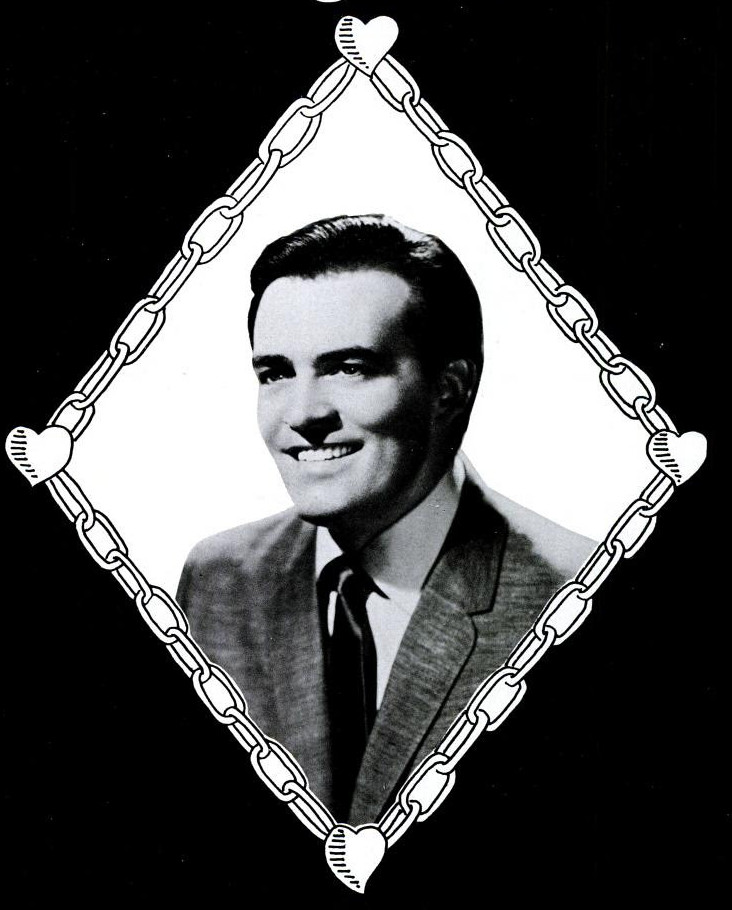
Ronnie Dove died at home under hospice care on 15 September, aged 91. MusicRow reports the death, and the career it closes is an unusual one: a Baltimore club singer who cut pop hits in Nashville, drifted towards country when the hits stopped, then bought control of his own recordings and spent thirty years selling them himself.
He was born Ronald Eugene Dove in Virginia and raised there. While serving in the Coast Guard through the 1950s he started performing in Baltimore nightclubs, and the city stayed his base for the rest of his life, which is rarer than it sounds for a singer whose records were made 700 miles away.
After a stretch with the group The Bell-Tones he signed as a solo act to Diamond Records, and the producer and label executive Phil Kahl took him to Nashville to record at Fred Foster's studio. Every one of his hits was cut on Music Row with the A-Team, the pool of session musicians who played on most of what came out of Nashville in that decade.
The run was substantial. Between 1964 and 1969 Dove placed 21 singles on the Billboard hit parade, six of which reached the pop top 20: Right Or Wrong in 1964, One Kiss for Old Time's Sake and A Little Bit of Heaven in 1965, then When Liking Turns to Loving, Let's Start All Over Again and Cry across 1966. Three more stopped just outside, among them Kiss Away, written by Billy Sherrill and Glenn Sutton, and a remake of the Eddy Arnold standard I Really Don't Want to Know.
The television work was as steady as the records. Dove starred in his own Baltimore series in 1966 and appeared nationally on American Bandstand, Where the Action Is, The Mike Douglas Show, The Merv Griffin Show and The Ed Sullivan Show. Billboard named him Top Easy Listening Artist of 1965, a category that covered exactly the kind of smoothly sung ballad he specialised in.
What happened next is the part of the story the obituaries usually skip. Diamond was sold to Nashville's Certron Records in 1970, Dove moved through a series of small labels, and he began aiming the same voice at the country market instead. Six country singles charted between 1972 and 1987, the biggest of them a version of Bobby Darin's Things that reached number 25 in 1975 on Motown's Melodyland imprint. Through the seventies he worked country television the way he had worked pop television, on That Nashville Music, Nashville Now and The Shotgun Red Variety Show.
He also built something that did not depend on a label at all. Dove opened his own nightclub in Baltimore and played it regularly through the 1980s, revived Diamond Records himself in 1987, and recorded a comeback album at Woodland Sound in 1988 with James Stroud among the producers. Because he owned his master recordings, he reissued his own hits repeatedly once compact discs arrived, which is a position almost none of his contemporaries were in.
He kept performing through the 1990s and retired in 2023, nearly seventy years after the Baltimore clubs. He is survived by his wife Marty, by six children, Michael, Ronnie Jr., Wayne, Don, Kelli and Kimm, and by five grandchildren and seven great-grandchildren. There was no viewing and his body was cremated; a Celebration of Life is to be held later.
The careers built in that window, Nashville sessions behind a singer signed somewhere else entirely, keep closing now. Frankie Miller, the Texas singer who wrote Black Land Farmer, died at 95 this year. The pop hub carries the rest of the week's news.
The facts
- Ronnie Dove died at home under hospice care on 15 September, aged 91.
- He placed 21 singles on the Billboard charts between 1964 and 1969.
- Six of them reached the pop top 20.
- All his hits were cut on Music Row with Nashville's A-Team session players.
- Billboard named him Top Easy Listening Artist of 1965.
- His version of Bobby Darin's Things reached number 25 country in 1975.
- He revived Diamond Records in 1987 and owned his own master recordings.
- He retired in 2023 and is survived by his wife Marty and six children.
How this checks out
Single source
Reported by a single outlet
Only one outlet has reported it so far, so it stays a single source.
Cited sources 1
Every outlet that reported this, linked to what it published. Equal credits, in alphabetical order.