
The Scottish National Jazz Orchestra opened a three-date Coltrane centenary tour at The Queen's Hall in Edinburgh on 18 September, and did it with music that mostly did not exist a year ago. Rather than programme the standard repertoire, the orchestra commissioned new arrangements of pieces John Coltrane wrote or was associated with, and added three fresh compositions about what he left behind.
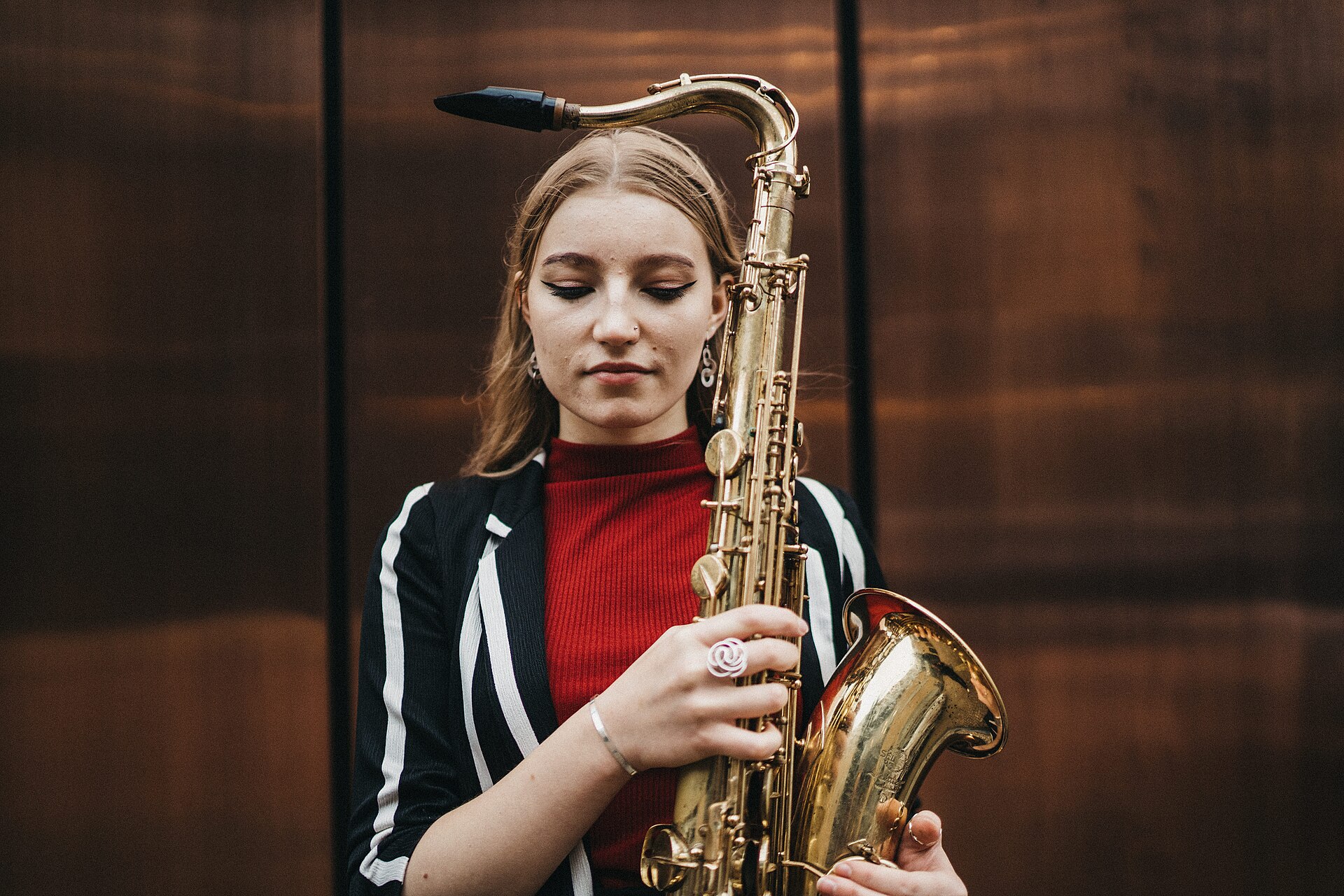
The guest was Emma Rawicz, in her debut with the SNJO and her first performance in Scotland. She spent much of the evening trading with the orchestra's own saxophone section, and her pleasure at being there was visible whether she was playing or listening.
The staging made an argument. Piano, bass and drums sat at the front with Rawicz, the rest of the orchestra behind them, which put the classic quartet formation at the centre of a big band. Several passages had Rawicz working with the rhythm section alone, or with drums or bass by themselves, as Coltrane did. It gave the full orchestra somewhere to arrive from.
The most striking moments involved the human voice. Joe Wright's new piece Then He Spoke With A Human Voice built samples of Coltrane speaking in interviews into electronic treatments, the voice sounding frail across the decades. Harben Kay's arrangement paired Equinox with Alice Coltrane's Blue Nile and had the whole orchestra chanting "may there be peace love and affection" before picking up their instruments to play the Blue Nile riff in unison. Konrad Wiszniewski took a storming tenor solo in it.
There was more chanting in Iain Ballamy's suite, and a story behind it. The Skye Chanter is dedicated to Rick Taylor, the trombonist and jazz educator who lived on Skye and who would lead children in a chant of Coltrane's name. Ballamy had the orchestra do the same, an echo of the chant in Acknowledgement from A Love Supreme. The suite's opening section, Thought Waves, had Harben Kay's tenor sounding like highland pipes in a duet with Rawicz that worked as conversation rather than contest.
Rawicz also arranged and conducted Billy Strayhorn's Lush Life, scoring it for flutes and clarinets before opening it out into a fast swinging section for the full band, with Paul Towndrow taking a slow alto solo that built over an orchestral riff.
John O'Gallagher's Celestial Objects took its cue from Interstellar Space, one of Coltrane's last records, and featured a blistering soprano solo from Martin Kershaw and a passage for Rawicz with only Alyn Cosker's drums behind her. Kershaw's own arrangement of Attaining held long notes across the sections, structured in places and close to free in others.
The Coltrane pieces spanned his whole recording career, from his earliest sessions to the compositions he wrote shortly before his death at 40. That span is the point of a centenary programme: a career that short is easy to reduce to two or three famous records, and a full-orchestra survey makes the range of it audible.
Jon Irabagon's arrangement of My Favourite Things closed the night, opening with Rawicz on soprano and Cosker alone before the band entered on the chords every Coltrane listener knows. Tom McNiven took a trumpet solo up to the top of the horn and Anoushka Nanguy followed with a bluesy trombone solo.
The remaining dates of the tour follow. Concert listings are collected on the tour guide, and more jazz coverage sits on our genre hub, including the Kings Place Jazz Orchestra's own September concert.
The facts
- The concert was at The Queen's Hall in Edinburgh on 18 September 2026.
- It opened a three-date Coltrane centenary tour.
- The orchestra commissioned new arrangements plus three new compositions.
- Emma Rawicz was guest soloist, in her first Scottish performance.
- Joe Wright's piece used samples of Coltrane speaking in interviews.
- Iain Ballamy's suite The Skye Chanter is dedicated to Rick Taylor.
- Jon Irabagon's arrangement of My Favourite Things closed the concert.
How this checks out
Single source
Reported by a single outlet
Only one outlet has reported it so far, so it stays a single source.
Cited sources 1
Every outlet that reported this, linked to what it published. Equal credits, in alphabetical order.