
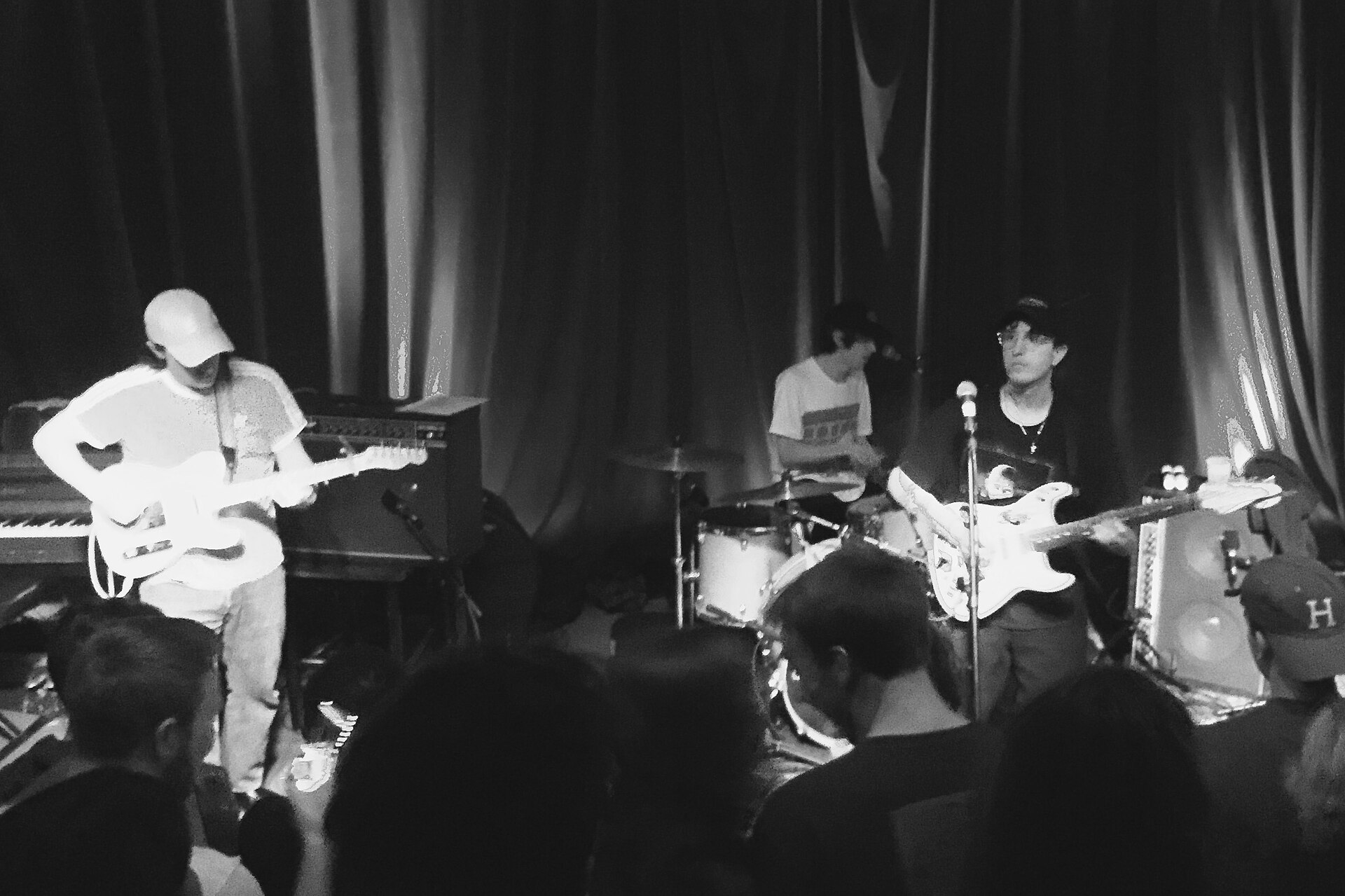
Dustin Payseur has no patience left for the phrase that has followed his band around for fifteen years. Speaking to Indie Hoy before a show in Buenos Aires, the Beach Fossils founder said he is happy enough with shoegaze, post-punk or dream pop, because those words tell somebody what a record sounds like. Indie rock, he argued, became so generic that it stopped meaning anything, and he made the practical objection rather than the aesthetic one: it used to mean you were independent, and now people call bands on the biggest labels indie.
The complaint carries more weight from him than from most, because he has spent the last decade on the other side of it. Payseur founded Bayonet Records with Katie Garcia, who had been an intern and then label manager at Captured Tracks, and the two funded it by asking for donations instead of wedding gifts. He has said the model he had in mind was Captured Tracks and Rough Trade, labels that ran outside corporate logic and doubled as a place for a circle of musicians to find each other.
That circle is the other half of the story. Beach Fossils came up on Captured Tracks alongside Mac DeMarco, DIIV and Wild Nothing, a group whose records shared a nostalgic, atmospheric, low-fidelity sound, and Payseur still names Jack Tatum of Wild Nothing and Cole of DIIV among his closest friends. The label he built was an attempt to keep that arrangement going for the next set of bands.
The first Beach Fossils record was made alone with whatever was in the room. Payseur had a guitar and no bass and no vocal microphone, so he sang into the microphone on his laptop, played the bass parts on the guitar, and borrowed a bass from somebody for a song or two. He had grown up recording on four-track cassette machines and liked the limits, and says he did not think of them as limits at the time. Now, with his own studio and a room full of equipment, he finds the opposite problem: too many options can get in the way of actually working.
The inversion he stumbled into then became the band's signature. Guitars played as though they were basses and basses carrying the main melody, with bright, carefully chosen notes stacked over a blurred backing and vocals buried in reverb until they sound detached. What a Pleasure followed in 2011, an EP that came out of nights of improvisation with the bassist Peña and Tatum, and Payseur is clear that other players were involved but that the project stayed his.
Clash the Truth in 2013 tilted towards dream pop: slower, more distorted, more diffuse, with Kazu Makino of Blonde Redhead singing alongside him on In Vertigo and Generational Synthetic picking up post-punk edges. Sleep Apnea, from the same record, became a fixture of the live set, which is where Payseur says he actually hears his own songs. He never sits down and listens to them at home, so playing them is usually the only time he encounters them, and he still notices guitar lines and lyrics he likes mid-performance.
Somersault arrived in 2017 with flute, piano, saxophone and a harpsichord on it, produced by Jonathan Rado of Foxygen and featuring Rachel Goswell of Slowdive on Tangerine. It was the brightest thing the band had made and also the most political, with St. Ivy carrying a line about wanting to believe in America and not knowing where it is. Then came The Other Side of Life: Piano Ballads in 2021, a lockdown record built remotely with the former drummer Tommy Gardener, on which Payseur played nothing and only sang.
Bunny in 2023 pulled the threads together, jangle from the early records, dream pop and post-punk from the middle ones, plus small orchestral and improvised gestures drawn from his interest in jazz and classical music. The lyrics kept the mundane detail of the first albums, long-distance buses and cigarettes out of car windows, but took on fatherhood and grief as well. He says he worried that would push people away, then decided he writes about what he is living through because that is how he deals with it.
The band around him has changed constantly, twelve drummers and three guitarists over more than fifteen years, and the current line-up is Jack Doyle Smith on bass, Tommy Davidson on guitar and Anton Hochheim on drums. Asked what he would tell himself before starting, Payseur said he would pick a better name; he has never much liked the one on the demo he sent Captured Tracks, and it stuck because they started releasing music immediately.
The next record is close. Payseur told Indie Hoy the band is deep into it and nearly done, and that he has barely been outside or had a social life while finishing it. The only release since Bunny has been a cover of Duster's Inside Out, put out in January 2025 as a nod to one of his slowcore touchstones. Beach Fossils play C Art Media in Buenos Aires on Tuesday 22 September with Wishy, and the argument about what to call any of this will presumably outlast the tour: other bands on the indie hub and the rock hub are living with the same label, among them Sam Burton, who signed to Captured Tracks this year and DIIV, whose fifth album ZIRP! has A.G. Cook producing.
The facts
- Dustin Payseur says the indie rock tag has lost its meaning.
- He recorded the debut album alone, singing into a laptop microphone.
- Beach Fossils have been through twelve drummers and three guitarists.
- Payseur says the band's next album is nearly finished.
- He founded Bayonet Records with Katie Garcia, funded by their wedding.
How this checks out
Single source
Reported by a single outlet
Only one outlet has reported it so far, so it stays a single source.
Cited sources 1
Every outlet that reported this, linked to what it published. Equal credits, in alphabetical order.